



Fleet operations
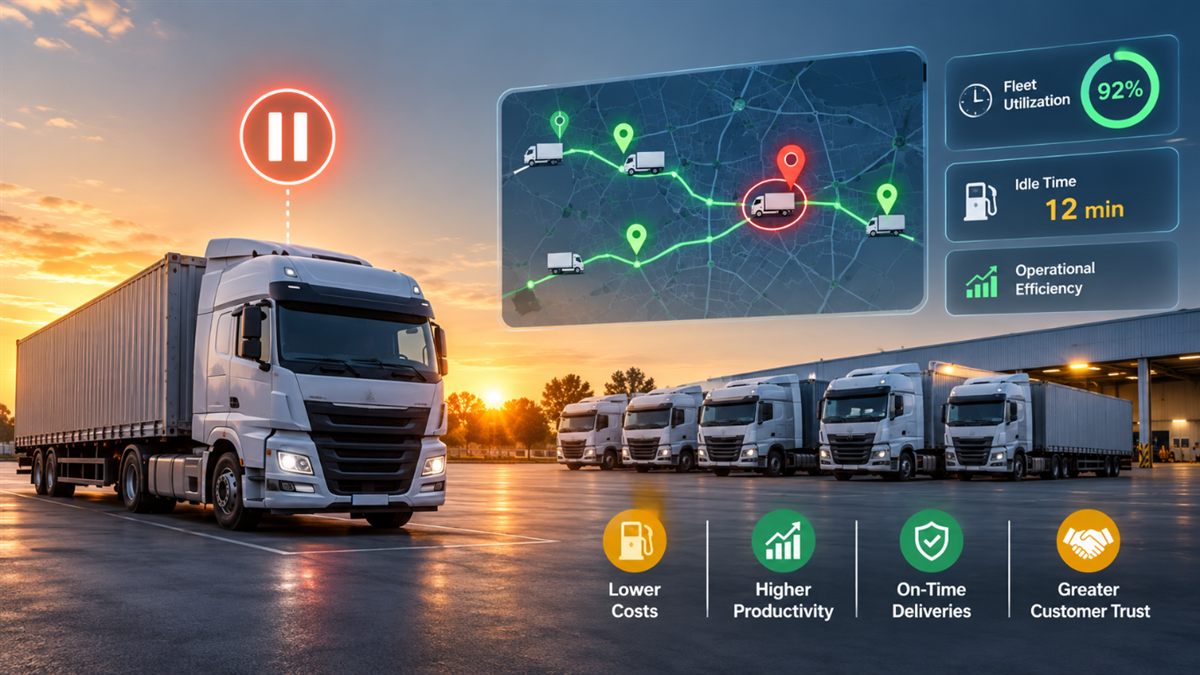
The Most Expensive Vehicle in Your Fleet May Be the One That Isn't Moving
How avoidable vehicle downtime affects fleet productivity, operating costs and delivery performance.
The hidden cost of an inactive vehicle
When logistics companies evaluate fleet operating costs, they usually focus on fuel consumption, vehicle maintenance, insurance, driver expenses and fleet expansion.
But another important factor often receives less attention: avoidable vehicle downtime.
Fleet downtime refers to the time a vehicle remains unavailable for productive operations or sits unused when it could be assigned to a planned task.
Not every stationary vehicle represents lost productivity. Loading, unloading, scheduled breaks, maintenance and safety-related stops are necessary parts of logistics operations.
The real challenge is unnecessary waiting, poor dispatch coordination, inefficient route planning and unplanned stoppages.
A vehicle does not necessarily have to be moving to generate operational value. But when it remains inactive without a valid operational reason, costs can accumulate while productivity declines.
The Hidden Cost of Fleet Downtime
Consider a fleet of 100 vehicles.
If each vehicle loses just 30 minutes every day because of avoidable waiting, inefficient planning, unnecessary stops or delayed coordination, the combined impact becomes significant.
That represents:
- 50 vehicle-hours lost every day.
- 1,500 vehicle-hours lost over a 30-day month.
- Lost capacity that may affect labour, vehicle ownership costs, fuel use, delivery performance and fleet utilization.
This is a hypothetical example, but it demonstrates how small inefficiencies can accumulate across a large fleet.
Engines left running during unnecessary stops can consume additional fuel, while depreciation, leasing and insurance expenses continue regardless of use.
An engine switched off does not eliminate the cost of an unused vehicle. It simply changes which operating costs are accumulating.
Why Fleet Visibility Matters
A fleet manager cannot improve vehicle utilization without understanding how vehicles are actually being used.
Knowing a vehicle's location is important, but location alone does not explain why it has stopped, how long it has been waiting or whether the delay could have been avoided.
With real-time fleet monitoring, operational teams can investigate frequent unplanned stops, routes that consistently run long, unnecessary waiting periods, dispatch alignment, recurring delay locations and slow responses to route deviations.
From Vehicle Tracking to Better Fleet Utilization
High-performing logistics organizations look beyond vehicle movement. They focus on productivity, operational coordination and effective asset utilization.
Important performance indicators include:
- Vehicle Utilization: How much available operating time is spent on productive assignments.
- Unplanned Stop Duration: How frequently vehicles stop unexpectedly and how long they remain at those locations.
- Route Performance: How planned routes and journey times compare with actual vehicle movements.
- Waiting and Turnaround Time: Delays at warehouses, depots, loading points and delivery locations.
- Engine Idling: Unnecessary engine-running time where suitable vehicle or tracking data is available.
These indicators help organizations distinguish normal operational requirements from avoidable inefficiencies.
Tracking data should be considered alongside dispatch records and operational information. A GPS system can identify a prolonged stop, but understanding its cause may require additional context from the driver or operations team.
How GPS Tracking Supports More Efficient Fleet Operations
GPS vehicle tracking helps organizations monitor vehicle locations, review route performance and identify unusual stoppages.
When combined with effective dispatch planning and operational coordination, the information can support better fleet utilization.
NLC Smart Solutions' NAVIGO combines live vehicle location tracking, GSM and satellite connectivity, AI-powered reporting and 24/7 route monitoring to help operators maintain visibility across vehicles, routes and drivers.
For logistics and transportation businesses operating across Pakistan, better fleet visibility is especially valuable when managing multiple vehicles, routes and operational locations.
The Future of Fleet Operations
The future of fleet management will depend increasingly on how effectively organizations use the vehicles, information and resources they already have.
Successful operators reduce avoidable downtime, improve vehicle and driver utilization, identify route inefficiencies, strengthen dispatch coordination and make faster, better-informed decisions.
The goal is not to keep every vehicle moving every minute.
It is to ensure that every vehicle is used effectively, safely and for the right operational purpose.
Fleet efficiency is not simply about how far vehicles travel—it is about how much value they generate throughout the journey.
A Question for Logistics Leaders
If you could improve just one area of your fleet operations today, which would make the greatest difference?
Reducing unnecessary downtime, improving vehicle utilization, increasing real-time visibility or accelerating operational decision-making?
Frequently Asked Questions
1. What is fleet downtime?
Fleet downtime is the period when a vehicle is unavailable for productive operations or remains unused despite being available for an assignment.
2. How does vehicle downtime affect logistics costs?
Avoidable downtime can increase labour and vehicle ownership costs, fuel consumption, reduce fleet capacity and cause delayed deliveries.
3. Can GPS vehicle tracking help reduce fleet downtime?
Yes. GPS tracking helps managers monitor location, route history and unusual stops, supporting better planning and faster investigation.
4. What is the difference between engine idling and vehicle downtime?
Engine idling means the engine is running while the vehicle is stationary. Downtime is broader and includes any period when the vehicle is not available for productive work.
5. How can logistics companies improve fleet utilization?
Monitor vehicle movements, identify waiting periods, review route performance, coordinate dispatch schedules and use operational data to allocate resources.
Looking for a solution for your operations?
Tell our team what you need, and we'll help you explore the right next step.
Talk to our team