



Fleet operations
Why Proactive Fleet Management Is the Future of Logistics
How real-time vehicle tracking, operational monitoring and structured risk management help logistics organizations prevent disruptions and improve fleet performance.
The foundation of proactive fleet management
Every fleet operation faces operational risks.
An unexpected route deviation, prolonged vehicle halt, unauthorized movement, cargo security concern or delivery delay can disrupt operations and affect customer commitments.
Successful fleet management is not simply about responding when something goes wrong.
It is about identifying risks early, understanding their impact and taking appropriate action before they become larger problems.
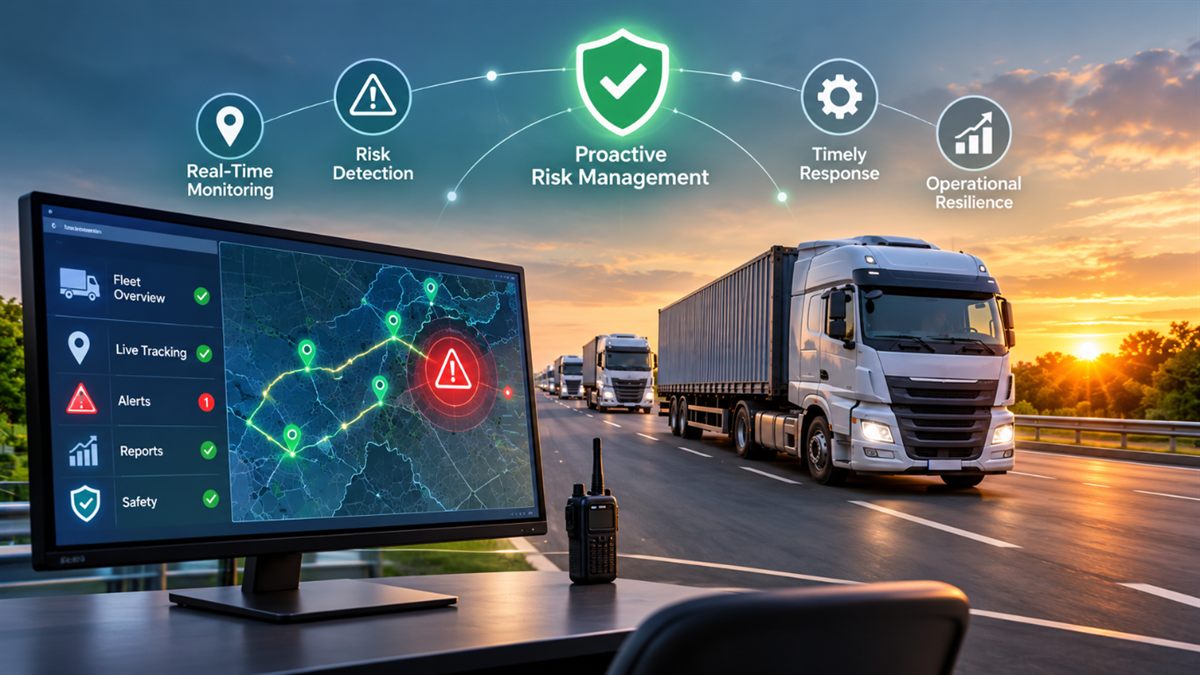
For logistics organizations, combining GPS tracking, continuous fleet monitoring and structured risk management improves operational visibility and accountability.
Understanding Operational Risks in Fleet Management
Fleet operations involve multiple vehicles, drivers, routes, delivery schedules and locations.
Common risks include:
- Route deviations: Vehicles travelling outside approved or planned routes.
- Unexpected vehicle halts: Unplanned stops that may indicate delay, vehicle problems or another issue.
- Delivery delays: Disruptions that affect delivery schedules and customer commitments.
- Cargo security concerns: Unauthorized access, suspicious stops or movements requiring verification.
- Communication gaps: Delayed information exchange between drivers, dispatch teams and control centres.
- Asset misuse: Unauthorized movements or activities outside approved operational requirements.
Not every alert indicates an actual incident. Effective risk management requires organizations to investigate unusual activity, establish the cause and distinguish genuine threats from normal operations.
Risk Identification Starts with Real-Time Fleet Visibility
Effective risk management begins with visibility.
GPS vehicle tracking systems help organizations monitor locations, review route histories and identify unusual movement patterns.
Real-time monitoring provides insight into vehicle locations, route progress, deviations, prolonged stops, journey performance and recurring operational problems.
When relevant alerts are configured, teams can investigate unusual activities more quickly and determine whether intervention is necessary.
The objective is not simply to collect vehicle location data. It is to turn operational visibility into timely and informed action.
Moving from Risk Identification to Proactive Mitigation
Proactive fleet risk management involves:
- 1. Continuous Monitoring: Identify unusual patterns and potential disruptions.
- 2. Route Compliance: Compare actual movements with planned routes.
- 3. Timely Alerts: Help teams recognize situations requiring attention.
- 4. Standard Operating Procedures: Define responsibilities for drivers, managers and control centres.
- 5. Effective Communication: Coordinate verification and response across teams.
- 6. Performance Reporting: Identify recurring risks, inefficiencies and improvement opportunities.
Together, these practices move organizations away from purely reactive management towards structured operational risk mitigation.
Corrective Action Builds Operational Resilience
Even well-managed fleets experience unexpected incidents.
A structured response should include incident verification, root-cause investigation, corrective intervention, incident documentation and continuous improvement.
Organizations that follow a structured process can turn operational incidents into opportunities to strengthen fleet management.
- Incident verification: Confirm the situation using tracking information and communication with field teams.
- Root cause investigation: Determine why the incident occurred.
- Corrective intervention: Adjust a route, arrange support or escalate a security concern.
- Incident documentation: Record relevant details, actions and outcomes.
- Continuous improvement: Update procedures to reduce similar problems.
Measuring the Effectiveness of Fleet Risk Management
Organizations can evaluate fleet risk management using route-deviation frequency, unexpected-stop duration, alert acknowledgement time, incident response time, on-time delivery performance and recurring incident frequency.
These indicators provide a more meaningful picture of fleet performance than vehicle location alone.
They also help managers identify where attention, improved coordination or procedure changes may be required.
How Technology Supports Proactive Fleet Management
GPS vehicle tracking and fleet management solutions help organizations monitor movements, review route performance and identify unusual activities.
When supported by suitable alerts, reporting tools and established procedures, these technologies improve awareness, strengthen coordination and support better-informed decisions.
NLC Smart Solutions provides vehicle tracking and fleet management solutions for operational visibility and effective fleet monitoring.
Technology is most valuable when integrated into daily processes. Trained personnel, clear procedures and timely corrective action remain essential.
The Future of Fleet Operations Is Proactive
Organizations will need to anticipate operational challenges, respond to emerging risks and continuously improve the way fleets are managed.
This requires real-time visibility, proactive risk identification, effective mitigation, structured corrective action, data-driven decisions and continuous improvement.
The goal is to identify risks earlier, respond more effectively and maintain reliable services even when unexpected situations arise.
Effective fleet management is not just about knowing where vehicles are. It is about knowing what is happening, understanding the risks and deciding what to do next.
A Question for Logistics Leaders
What do you consider the most important element of effective fleet risk management?
Early risk identification, proactive risk mitigation or timely corrective action?
Frequently Asked Questions
1. What is proactive fleet management?
It is an approach that identifies and addresses potential operational risks before they become major disruptions.
2. How does GPS vehicle tracking help with fleet risk management?
It provides location, route history and unusual movement or stop information for faster investigation and informed decisions.
3. What are the most common fleet risks?
Unauthorized movement, route deviations, unexpected stops, delivery delays, cargo security concerns, communication gaps and vehicle disruptions.
4. How can logistics companies reduce operational risk?
Use continuous monitoring, route compliance, timely alerts, standard procedures, communication, incident investigation and regular reviews.
5. What is the difference between proactive and reactive fleet management?
Proactive management addresses potential issues before escalation; reactive management primarily responds after an incident.
6. Why is real-time fleet monitoring important?
It gives teams more timely information for identifying unusual activities, investigating problems and coordinating responses.
Looking for a solution for your operations?
Tell our team what you need, and we'll help you explore the right next step.
Talk to our team